
Argentina 2022 harvest draws to a close, after "most unusual" vintage
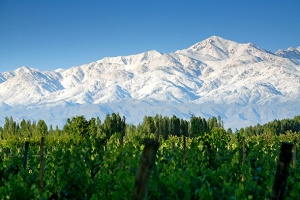
The Argentinean harvest has drawn to a close, with winemakers around the country reporting the most singular of vintages in recent years.
"The 2021-2022 season reminds me of a good Hollywood movie,"Martín Kaiser, viticulturist at Doña Paula in Mendoza told .Decanter. ‘"t certainly kept us entertained. Our hearts were in our mouths all the way through, but it had a great ending.”
The season kicked off with a cool, dry spring, with low snowfall, resulting in less water in a region already hit by severe water shortages. This was followed by five sharp frosts recorded between October and November, in the Uco Valley, the lower areas of Lujan de Cuyo and the east of Mendoza, where most of Argentina’s biggest wineries are situated.
Gabrieal Garcia, winemaker at Boegas Salentin said that while damage wasn’t immediately apparent, following bud break the ripening speeds were uneven, resulting in yields down by as much as a quarter in some areas, and 10% across the province as an average.
Rain between December and February meant that wineries hurried to bring their white grapes in. “This year, the whites were the big challenge, but if the harvest was done well they achieved good quality and fresher wines, albeit in lower volumes said Agustina Hanna, head winemaker at Bodega Ruca Malen. A frost in March, the earliest in living memory, affected several vineyards in the Uco valley and parts of Lujan de Cuyon causing considerable damage, although luckily around 90% of grapes had been picked.
“There’s no doubt it was a very unusal harvest,” said Alejandro Vigil. President of Wines of Argentina and chief winemaker at Catena Zapata. “But the fact is that it was one of the best I’ve seen in terms of quality.
In San Juan, which is Argentina’s second largest wine producing area, the harvest went well despite several potentially damaging climatic events. Three significant frosts affected the area before budding had taken place, and some heavy hailstorms when the fruit was still unripe posed a threat, but overall quality remained unaffected.
In the Northwest of the country where the greatest number of vineyards growing above an altitude of 1,670 metres above sea level are to be found, the harvest went well. "In the Calchaquí Valleys, the harvest was slightly delayed, allowing us to work in a relaxed manner and obtain fruit with very good freshness and aromatic expression,"reported Alejandro Pepa, the winemaker at El Esteco. A cool dry winter, followed by a good spring with no frosts or hailstorms enabled the fruit to develop in optimum conditions, with spring rain falling within historic averages.
In Patagonia, the vintage was unusal with difficulties experienced by grape growers in Río Negro and Neuquén. Winemaker Hans Vinding Diers from Bodega Noemía reports: ‘In Río Negro we’re very happy with the 2022 harvest, although there were a couple of late frosts that hit some of the vineyards. Most important was the warm spring, with intense winds, followed by a summer when the days were hot but nights cool, which suited the fruit very well.”